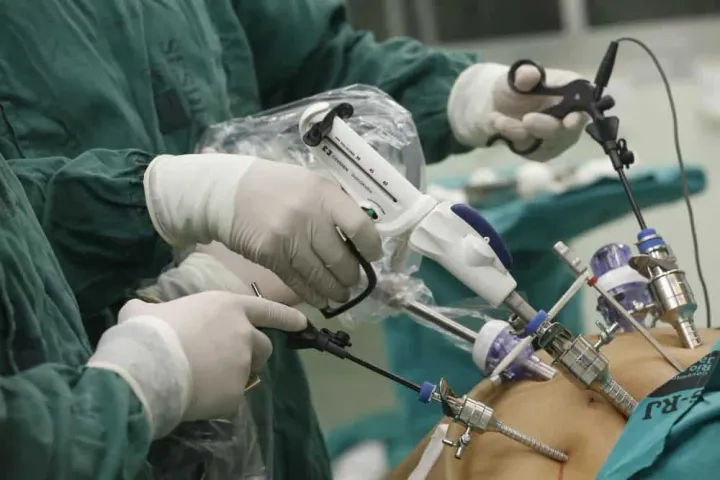
Dr. Siddharth Sankar Das performs laparoscopic (keyhole) procedures through small incisions, for gallbladder disease, hernias, appendicitis, reflux and colorectal conditions.
Laparoscopic surgery is a minimally invasive approach that uses small incisions and a camera instead of one large cut.
Minimal Scarring
Small incisions result in minimal scarring and better cosmetic outcomes compared to traditional open surgery.
Faster Recovery
Reduced trauma to surrounding tissues leads to shorter hospital stays and quicker return to normal activities.
Lower Complications
Reduced risk of infection, bleeding, and other complications associated with traditional open procedures.
Comprehensive Laparoscopic Procedures
Dr. Das performs a range of laparoscopic procedures, each designed to treat the condition with minimal patient discomfort.
Laparoscopic Gallbladder Surgery
Minimally invasive removal of the gallbladder through small incisions, offering faster recovery and reduced scarring.
Also known as laparoscopic cholecystectomy, this procedure is the gold standard for treating gallstones, gallbladder inflammation, and other gallbladder disorders. It is performed through 3-4 small incisions, resulting in minimal trauma to surrounding tissues.
Duration: 30-60 minutes
Recovery: 1-2 weeks
Key Benefits
Minimal scarring
Faster recovery
Less post-operative pain
Same-day discharge possible
Laparoscopic Inguinal Hernia Surgery
Advanced repair of inguinal hernias using minimally invasive techniques for optimal outcomes and faster recovery.
TEP (Totally Extraperitoneal) and TAP (Trans-Abdominal Pre-peritoneal) repairs offer superior outcomes for inguinal hernias. These techniques allow for mesh placement without entering the peritoneal cavity, reducing complications and improving patient comfort.
Duration: 45-90 minutes
Recovery: 2-3 weeks
Key Benefits
Reduced recurrence rates
Less chronic pain
Bilateral repair possible
Quick return to activities
Laparoscopic Umbilical Hernia Surgery
Precise repair of umbilical hernias using laparoscopic techniques for optimal cosmetic and functional results.
Laparoscopic umbilical hernia repair is particularly beneficial for larger hernias or recurrent cases. The technique allows for comprehensive visualization of the defect and secure mesh placement for long-lasting repair.
Duration: 30-60 minutes
Recovery: 1-2 weeks
Key Benefits
Excellent cosmetic results
Lower recurrence rates
Minimal post-operative pain
Strong mesh reinforcement
Laparoscopic Ventral Hernia Surgery
Advanced repair of ventral and incisional hernias using minimally invasive laparoscopic techniques.
IPOM (Intraperitoneal Onlay Mesh) technique provides excellent results for ventral hernias. This approach allows for repair of multiple defects simultaneously and offers superior outcomes compared to open repair.
Duration: 60-120 minutes
Recovery: 2-4 weeks
Key Benefits
Reduced wound complications
Lower infection rates
Comprehensive repair
Faster mobilization
Laparoscopic Appendectomy
Emergency and elective removal of the appendix using minimally invasive laparoscopic techniques.
Laparoscopic appendectomy is the preferred approach for appendicitis treatment. The technique allows for thorough inspection of the abdomen, irrigation if needed, and removal through small incisions with minimal tissue trauma.
Duration: 20-45 minutes
Recovery: 1-2 weeks
Key Benefits
Faster recovery
Less scarring
Reduced infection risk
Earlier return to work
Laparoscopic Colorectal Surgery
Advanced minimally invasive procedures for colorectal conditions including resections and repairs.
Including laparoscopic right hemicolectomy, left hemicolectomy, sigmoid colectomy, and rectal resections. These procedures offer oncologically sound treatment with enhanced recovery benefits for both benign and malignant conditions.
Duration: 2-4 hours
Recovery: 2-4 weeks
Key Benefits
Reduced hospital stay
Less blood loss
Faster bowel function recovery
Lower morbidity
Laparoscopic Antireflux Surgery
Fundoplication procedures to treat GERD and hiatal hernias using minimally invasive techniques.
Nissen and Toupet fundoplication procedures provide excellent long-term control of gastroesophageal reflux disease. These techniques restore the natural anti-reflux mechanism while preserving normal swallowing function.
Duration: 60-90 minutes
Recovery: 2-3 weeks
Key Benefits
Long-term GERD control
Reduced medication dependency
Minimal scarring
High success rates
Schedule Your Consultation
Take the first step towards better health. Contact us today to schedule your consultation with Dr. Siddharth Sankar Das.
Get in Touch
Aster Hospital, Kuwait St, near Sharaf DG, Mankhool, Dubai